

The ExecReps Methodology
A Comprehensive Framework for Developing Executive Communication Excellence
Version 1.0 | November 2025
Author: Jay Stansell, Founder & CEO, ExecReps.ai
Published: November 20, 2025
Executive Summary
The ExecReps Methodology represents a systematic, data-driven approach to developing executive communication competency. By combining multi-dimensional assessment, AI-powered feedback, and behavioral science principles, this framework transforms the traditionally subjective practice of "executive presence" into measurable, improvable skills.
This document outlines the complete methodology—from the theoretical foundations to practical implementation—providing a roadmap for individuals and organizations seeking to build world-class communication capabilities.
Core Components:
- Multi-Dimensional Assessment Framework: Holistic evaluation across vocal delivery and strategic content
- Scenario-Based Practice: Real-world business communication exercises tailored to professional roles
- Data-Driven Feedback: Objective metrics combined with qualitative coaching insights
- Growth-Oriented Design: Systems that reward improvement, consistency, and mastery
- Personalized Pathways: Role-specific rubrics and archetype-based development plans
1. Introduction: The ExecReps Philosophy
1.1 Core Principles
The ExecReps Methodology is built on five foundational principles:
1. Communication is Measurable
Executive communication skills can be quantified through objective acoustic analysis and structured content evaluation. What was once subjective becomes data.
2. Practice Precedes Performance
Excellence in high-stakes communication requires deliberate practice in controlled environments before real-world application. The methodology provides a "safe gym" for communication development.
3. Feedback Drives Growth
Immediate, specific, and actionable feedback accelerates skill development more effectively than delayed or vague coaching. The methodology delivers comprehensive insights within seconds.
4. Improvement Matters as Much as Achievement
Rewarding growth trajectories, not just current ability, sustains motivation and creates a growth-oriented mindset essential for long-term development.
5. Personalization Maximizes Impact
Different roles, industries, and communication styles require tailored assessment criteria and development pathways. One-size-fits-all approaches fail to address individual needs.
1.2 The Communication Excellence Model
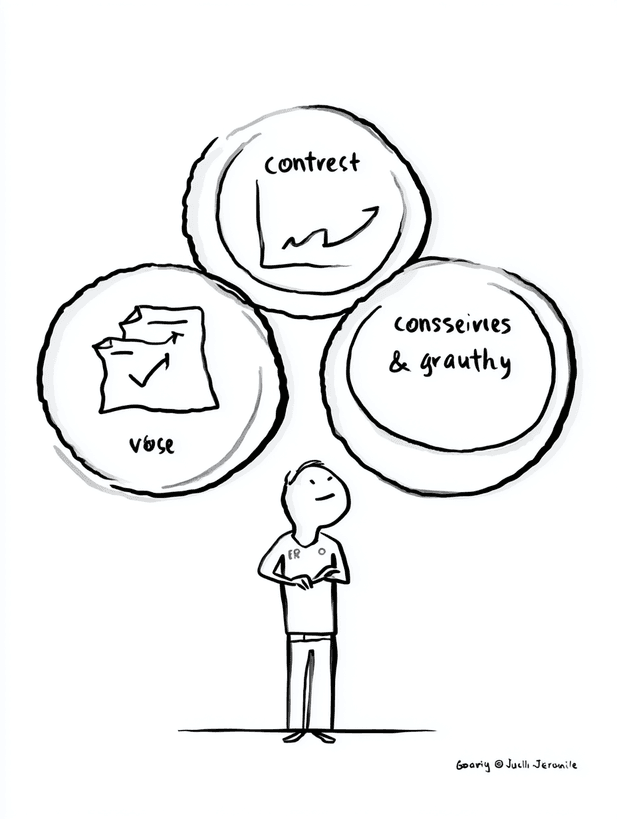
The methodology conceptualizes executive communication as the intersection of three elements: Strategic Content, Vocal Delivery, and Consistency & Growth. Each element is necessary but insufficient alone. Mastery requires balanced development across all dimensions, measured through comprehensive assessment and refined through targeted practice.
2. The Assessment Framework
2.1 Dual-Lens Evaluation
The ExecReps Methodology employs a dual-lens assessment approach:
2.1.1 Vocal Delivery Analysis
What It Measures: How executives communicate—the acoustic and vocal characteristics that create presence and authority.
Key Dimensions:
- Speaking Rate: Pacing that balances confidence with comprehension
- Vocal Fluency: Minimization of verbal clutter (filler words, hesitations)
- Vocal Clarity: Articulation quality and speech intelligibility
- Pause Patterns: Strategic use of silence for emphasis and decisiveness
- Emotional Tone: Sentiment and energy conveyed through voice
- Vocal Variety: Dynamic range in pitch, pace, and intensity
Assessment Method: Advanced speech recognition technology analyzes audio recordings, extracting acoustic features with word-level precision. Metrics are calculated automatically and compared against optimal ranges established through research.
2.1.2 Strategic Content Evaluation
What It Measures: What executives communicate—the substance, structure, and strategic quality of their messages.
Key Dimensions:
- Strategic Thinking: Ability to articulate high-level vision and frameworks
- Prioritization: Clear decision-making and trade-off analysis
- Stakeholder Awareness: Understanding of audience needs and concerns
- Metrics and Evidence: Use of data to support arguments
- Clarity of Structure: Logical organization and coherence
- Actionability: Concrete next steps and ownership
Assessment Method: State-of-the-art language models evaluate transcripts against profession-specific rubrics, providing category-by-category scoring and qualitative feedback.
2.2 The Four-Dimensional Framework
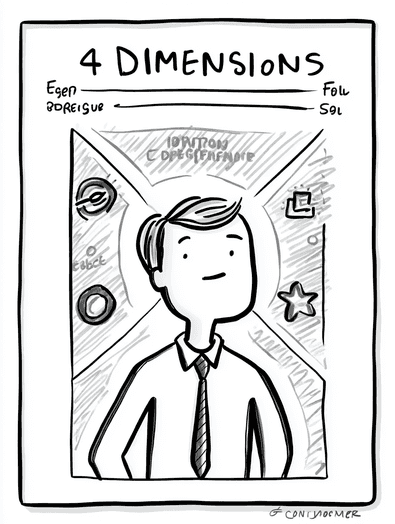
Both vocal delivery and content quality are evaluated across four complementary dimensions:
Dimension 1: Command & Authority
"Do you sound like a leader?"
Characteristics:
- Clear, decisive articulation
- Controlled pacing that conveys confidence
- Minimal hesitation or uncertainty
- Authoritative tone and projection
Business Impact: Command establishes credibility in high-stakes situations—board presentations, investor pitches, crisis communications—where authority is essential.
Dimension 2: Eloquence & Fluency
"Do you communicate with polish?"
Characteristics:
- Smooth, professional delivery without verbal clutter
- Precise word choice and articulation
- Natural flow and rhythm
- Executive-level polish (≤2% filler rate)
Business Impact:Eloquence differentiates amateur from professional speakers. It's the hardest dimension to master and the clearest signal of communication expertise.
Dimension 3: Engagement & Presence
"Do you captivate your audience?"
Characteristics:
- Positive emotional tone and enthusiasm
- Vocal variety that maintains attention
- Dynamic energy throughout delivery
- Charisma and personal connection
Business Impact: Engagement transforms competent communicators into inspiring leaders. This dimension separates those who inform from those who motivate.
Dimension 4: Consistency & Mastery
"Can you perform reliably across contexts?"
Characteristics:
- Stable performance across different scenarios
- Versatility in communication types (pitches, updates, negotiations)
- Adaptability to various audiences
- Proven track record through repeated practice
Business Impact: Consistency demonstrates internalized competency. Leaders must perform equally well in quarterly reviews, team meetings, and external presentations.
2.3 Integrated Scoring
The methodology combines dimensional assessments into unified metrics that provide both granular insights and high-level performance indicators:
- Voice Performance Score (VPS): 400-1000 scale measuring vocal delivery mastery
- Executive Impact Score (EIS): Normalized measure of content quality
- Executive Performance Score (EPS): Holistic metric combining delivery (40%) and content (60%)
These scores enable:
- Self-Assessment: Clear understanding of current capabilities
- Goal Setting: Specific, measurable improvement targets
- Benchmarking: Comparison to role-specific and industry standards
- Credential Building: Shareable evidence of communication competency
3. The Practice Model
3.1 Workout Structure
The ExecReps Methodology structures practice through "workouts"—scenario-based communication exercises that simulate real business situations.

Workout Components:
1. Context Setting
- Industry background
- Role definition
- Stakeholder landscape
- Business challenge or opportunity
2. Communication Task
- Specific prompt (e.g., "Convince the board to approve your budget")
- Time constraints (typically 2-3 minutes)
- Audience specifications
- Success criteria
3. Assessment Rubric
- 4-6 evaluation categories specific to the scenario
- Weighted importance of each category
- Profession-specific standards
4. Sample Response (optional)
- Reference example demonstrating strong performance
- Calibrates user expectations
- Illustrates effective communication strategies
3.2 Role-Specific Scenarios

Different professional roles require different communication competencies. The methodology provides tailored workout libraries:
Product Management Workouts
- Product roadmap presentations
- Feature prioritization discussions
- User research findings presentations
- Cross-functional alignment meetings
- Stakeholder update communications
Rubric Focus: User empathy, data-driven decision making, prioritization frameworks, stakeholder management
Sales Leadership Workouts
- Prospective client pitches
- Objection handling scenarios
- Value proposition articulation
- Negotiation simulations
- Team motivation communications
Rubric Focus: Persuasion techniques, objection handling, value articulation, relationship building
Engineering Leadership Workouts
- Technical design reviews
- Architecture decision presentations
- Trade-off analysis discussions
- Engineering strategy communications
- Technical debt prioritization
Rubric Focus: Technical clarity, trade-off reasoning, architectural thinking, complexity management
Executive Leadership Workouts
- Board presentations
- Investor pitches
- All-hands addresses
- Crisis communications
- Vision and strategy articulation
Rubric Focus: Strategic thinking, vision articulation, stakeholder alignment, executive presence
3.3 Progressive Difficulty
Workouts are designed with escalating complexity to support skill development:
Level 1: Foundation Building
- Single stakeholder scenarios
- Clear success criteria
- Straightforward contexts
- Basic communication structures
Level 2: Professional Competence
- Multiple stakeholder scenarios
- Competing priorities
- Realistic complexity
- Advanced communication strategies
Level 3: Executive Mastery
- Ambiguous or incomplete information
- High-stakes consequences
- Multiple valid approaches
- Expert-level nuance and judgment
Users progress through levels as they demonstrate mastery, ensuring continuous challenge and growth.
4. The Scoring System

4.1 Multi-Component Architecture
The ExecReps scoring system combines multiple data sources to produce comprehensive assessment. Acoustic analysis (speaking rate, fillers, pauses, clarity, sentiment, variety) and content evaluation (strategic thinking, prioritization, stakeholder awareness, structure) feed into dimensional scores and rubric category scores, which then produce integrated performance metrics: Voice Performance Score (VPS), Executive Impact Score (EIS), and Executive Performance Score (EPS).
4.2 Voice Performance Score (VPS) Methodology
Scale: 400-1000 points
Components:
1. Base Score (400 points)
Professional floor—all users start here with minimum practice volume
2. Dimensional Performance (600 points possible)
- Command & Authority: Weighted contribution
- Eloquence & Fluency: Weighted contribution (highest)
- Engagement & Presence: Weighted contribution
- Consistency & Mastery: Weighted contribution (lowest)
3. Growth Mechanics (300 points possible)
- Improvement Multiplier: Rewards positive trajectory (0-200 points)
- Volume Bonus: Rewards consistent practice (0-100 points)
Design Philosophy: The VPS weighs dimensions by difficulty of mastery. Eloquence receives the highest weight because filler word reduction requires the most deliberate practice. Consistency receives the lowest weight because it naturally improves with practice volume. This creates a motivational gradient that rewards genuine skill development.
Growth mechanics ensure that users with improving trajectories score higher than plateaued users, even if current absolute performance is lower. This growth-oriented design sustains motivation and encourages continuous practice.
4.3 Executive Impact Score (EIS) Methodology
Scale: Normalized to population distribution
Components:
1. Category-Level Assessment
- Each rubric category scored 1-5
- Category-specific qualitative feedback
- Weighted by importance to overall scenario
2. Overall Content Score
- Weighted average of category scores
- Constrained to not exceed category average
- Converted to 0-100 scale
3. Population Normalization
- Z-score transformation for fair comparison
- Percentile rankings within role and industry
- Prevents score inflation over time
4.4 Executive Performance Score (EPS) Methodology
Scale: 400-1000 points (aligned with VPS)
Formula: EPS = (EIS × 0.60) + (VPS × 0.40)
Rationale: Content quality (60%) receives higher weight than delivery (40%) because substance ultimately matters more than style for executive communication. However, delivery remains critical—a brilliant strategy poorly communicated fails to inspire action. This balance ensures users develop both dimensions while prioritizing strategic thinking and content quality.
4.5 Certification Bands
Scores map to achievement levels that provide aspirational milestones:
| Score Range | Band | Interpretation |
|---|---|---|
| 900-1000 | Executive Mastery | World-class communicator; keynote-ready |
| 800-899 | Professional Excellence | Exceptional clarity and presence |
| 700-799 | Advanced Proficiency | Strong executive communication |
| 600-699 | Skilled Professional | Competent business communicator |
| 500-599 | Developing Professional | Solid foundation; actively refining |
| 400-499 | Emerging Communicator | Building competency; showing progress |
Each band represents legitimate professional standing on a development journey, avoiding judgmental language while providing clear progression targets.
5. The Feedback Loop

5.1 Immediate Assessment Cycle
The ExecReps Methodology delivers feedback within 30-90 seconds of submission, enabling rapid learning cycles through a continuous process: Practice → Submit → Analyze → Feedback → Reflect → Practice.
Phase 1: Practice (2-3 minutes)
- User records response to workout prompt
- Time constraints mirror real-world pressure
- Multiple takes allowed before final submission
Phase 2: Submit (instant)
- Audio uploaded to platform
- Processing initiated automatically
- User can continue browsing while analysis runs
Phase 3: Analyze (30-90 seconds)
- Speech-to-text transcription
- Acoustic feature extraction
- Content evaluation against rubric
- Score calculation across all dimensions
Phase 4: Feedback (comprehensive)
- Multi-dimensional score breakdown
- Category-by-category assessment
- Qualitative strengths and improvements
- Comparison to past performance and population benchmarks
Phase 5: Reflect (self-guided)
- Review transcript with highlighted insights
- Identify patterns across submissions
- Set specific improvement goals
- Select next workout aligned with development priorities
Phase 6: Practice (iterative)
- Apply feedback to next workout
- Target specific dimension for improvement
- Build muscle memory through repetition
- Track progress over time
5.2 Feedback Components
Each assessment provides multiple layers of insight:
Quantitative Metrics
- Overall scores (VPS, EIS, EPS)
- Dimensional breakdowns (0-1 scale)
- Acoustic metrics (WPM, filler rate, pause patterns)
- Historical trends (improvement trajectories)
- Percentile rankings (population comparisons)
Qualitative Insights
- Strengths: 3-5 specific positive observations
- Improvement Areas: 3-5 specific, actionable recommendations
- Category Feedback: Detailed insights per rubric category
- Archetype Characteristics: Communication style insights
Visual Dashboards
- Dimensional radar charts showing profile
- Trend lines displaying progress over time
- Heatmaps indicating focus areas
- Comparative benchmarks against role/industry
5.3 Adaptive Recommendations
The methodology uses performance data to suggest personalized development pathways:
- Dimension-Specific Workouts: Recommend exercises targeting weakest dimension
- Skill Progression: Suggest next difficulty level when mastery demonstrated
- Role Transitions: Provide workouts for career advancement (e.g., IC → Manager → Director)
- Industry Adaptation: Offer sector-specific communication scenarios
6. Personalization and Archetypes
6.1 The Archetype System

Based on dimensional strengths, users are classified into communication archetypes—positive, aspirational identities that create emotional investment in development.
The Eight Archetypes:

1. The Commander
- Profile: High Command + High Consistency
- Strengths: Clear, decisive, authoritative
- Development Focus: Increase engagement and storytelling
- Ideal Roles: Operations executives, military leaders

2. The Storyteller
- Profile: High Engagement + High Eloquence
- Strengths: Captivating, persuasive, inspirational
- Development Focus: Enhance strategic frameworks
- Ideal Roles: Sales leaders, marketers, founders

3. The Analyst
- Profile: High Command + High Eloquence
- Strengths: Precise, articulate, logical
- Development Focus: Develop emotional resonance
- Ideal Roles: Finance executives, consultants

4. The Visionary
- Profile: High Engagement + High Command
- Strengths: Inspiring presence with authority
- Development Focus: Refine polish and consistency
- Ideal Roles: CEOs, founders, change leaders
5. The Diplomat
- Profile: Balanced across all dimensions
- Strengths: Versatile, adaptable, well-rounded
- Development Focus: Develop signature strength
- Ideal Roles: Product managers, HR leaders

6. The Mentor
- Profile: High Consistency + Strong Improvement
- Strengths: Reliable, steady growth, teachable
- Development Focus: Increase vocal dynamics
- Ideal Roles: Coaches, educators, people managers

7. The Maverick
- Profile: High Engagement + Variable Consistency
- Strengths: Dynamic, creative, unconventional
- Development Focus: Build reliability and polish
- Ideal Roles: Creative directors, innovators

8. The Practitioner
- Profile: Solid Eloquence + Solid Consistency
- Strengths: Professional, dependable, detail-oriented
- Development Focus: Increase command and energy
- Ideal Roles: Engineers, legal counsel, analysts
6.2 Archetype-Based Development
Each archetype receives customized guidance:
- Workout Recommendations: Exercises tailored to archetype strengths and growth opportunities
- Role Models: Examples of successful executives with similar communication profiles
- Coaching Focus: Dimension-specific improvement strategies aligned with archetype
- Community: Connection with users of similar archetypes for peer learning
6.3 Multi-Identity Recognition
Users may exhibit different archetypes across contexts:
- Default Archetype: Overall communication style across all workouts
- Scenario-Specific Archetypes: Style in particular contexts (e.g., "Commander in board meetings, Storyteller in sales pitches")
- Archetype Evolution: How communication style develops over time
This nuanced approach recognizes that effective executives adapt their communication to context while maintaining authentic voice.
7. Implementation Guidelines
7.1 Individual Implementation
For Professionals Developing Communication Skills:
Week 1-2: Baseline Assessment
- Complete 3-5 foundational workouts across different scenarios
- Establish baseline VPS, EIS, and dimensional profile
- Identify archetype and primary development opportunities
- Set specific 30-day improvement goals
Week 3-4: Focused Practice
- Target lowest-performing dimension with specialized workouts
- Aim for 2-3 submissions per week
- Review feedback immediately after each submission
- Apply learnings to subsequent workouts
Month 2-3: Skill Integration
- Return to original workout types to measure improvement
- Expand to new scenario types
- Increase difficulty level as competency grows
- Track improvement trajectory and volume bonus
Month 4+: Mastery and Maintenance
- Maintain consistent practice (1-2 workouts weekly)
- Challenge yourself with executive-level scenarios
- Share VPS credentials on LinkedIn/resume
- Consider coaching for breakthrough to next band
Best Practices:
- Record in quiet environment with professional audio quality
- Review transcript after submission to catch patterns
- Focus on one dimension at a time for rapid improvement
- Celebrate milestones and certification band progressions
7.2 Team Implementation
For Organizations Building Communication Excellence:
Phase 1: Pilot Program (Week 1-4)
- Select 10-20 early adopters across functions
- Provide onboarding and training on methodology
- Assign role-specific workout playlists
- Gather feedback on platform and workouts
Phase 2: Baseline Assessment (Week 5-8)
- Deploy to full team cohort
- Require minimum 3 workouts for VPS calculation
- Conduct team average benchmarking
- Identify team strengths and development areas
Phase 3: Structured Development (Month 3-6)
- Set team communication improvement goals
- Implement weekly practice expectations (1 workout minimum)
- Create internal leaderboards and challenges (opt-in)
- Provide manager dashboards for coaching insights
Phase 4: Integration with Talent Processes (Month 7+)
- Include VPS/EPS in promotion criteria
- Reference communication scores in performance reviews
- Incorporate into leadership development programs
- Track correlation with business outcomes (win rates, engagement scores)
Team Analytics:
- Average VPS by function, level, tenure
- Dimensional heatmap showing team strengths/gaps
- Archetype distribution for team composition insights
- Improvement velocity and practice volume metrics
- Benchmarking against industry comparables
7.3 Coaching Integration
For Executive Coaches and Trainers:
The ExecReps Methodology complements 1-on-1 coaching:
Before Coaching:
- Client completes 5-10 workouts to establish baseline
- Coach reviews VPS profile and archetype
- Identifies data-driven coaching priorities
- Sets measurable goals for coaching engagement
During Coaching:
- Weekly assignments targeting specific dimensions
- Review feedback together and refine technique
- Use quantified metrics to prove ROI
- Adjust coaching focus based on progress data
After Coaching:
- Compare final VPS to baseline (demonstrate improvement)
- Celebrate certification band progression
- Establish maintenance practice schedule
- Provide before/after data for testimonials
Value Proposition:
- Objective Assessment: Replace subjective impressions with data
- Measurable Outcomes: Quantify coaching impact
- Scalable Insights: Serve more clients with AI-augmented feedback
- Credibility Enhancement: Data-backed coaching methodology
8. Measuring Progress
8.1 Key Performance Indicators
Individual Metrics:
- VPS Growth: Change in Voice Performance Score over time
- EIS Improvement: Trajectory of content quality scores
- Dimensional Balance: Convergence of dimension scores (reducing gaps)
- Practice Volume: Consistency of workout submissions
- Certification Progression: Advancement through bands
- Archetype Evolution: Changes in communication style profile
Team Metrics:
- Team Average VPS: Overall communication competency
- Activation Rate: % of team with 3+ submissions
- Engagement Rate: % completing 1+ workout per month
- Improvement Velocity: Rate of score increase across team
- Dimensional Gaps: Team weaknesses requiring focus
- Archetype Diversity: Distribution of communication styles
8.2 Success Criteria
Individual Success:
- VPS increase of 50+ points in 90 days
- Achievement of next certification band
- Demonstrable improvement in weakest dimension
- Application of skills to high-stakes real-world scenarios
- Positive feedback from stakeholders on communication improvement
Team Success:
- Team average VPS reaching target band (e.g., 700+ for senior leadership)
- 80%+ activation rate (3+ submissions per member)
- 50%+ engagement rate (1+ submission per month)
- Dimensional balance (all dimensions within 0.2 of each other)
- Measurable business impact (win rates, engagement scores, 360 feedback improvement)
8.3 Correlation with Business Outcomes
Organizations implementing the ExecReps Methodology can track correlations between communication scores and business metrics:
Sales Performance:
- Correlation between Sales Leader VPS and team quota attainment
- Win rate improvement following communication development
- Deal size increase associated with pitch quality scores
Leadership Effectiveness:
- Correlation between Executive VPS and employee engagement scores
- 360 feedback improvement following VPS development
- Promotion velocity for high-VPS professionals
Product Success:
- Correlation between PM VPS and product adoption metrics
- Stakeholder satisfaction with communication quality
- Cross-functional collaboration effectiveness
9. Conclusion: Implementing the Methodology
The ExecReps Methodology provides a comprehensive, scientifically-grounded framework for developing executive communication excellence. By combining multi-dimensional assessment, AI-powered feedback, scenario-based practice, and behavioral science principles, it transforms communication development from subjective art to measurable science.
Key Takeaways:
- Measurement Enables Improvement: Quantifying communication competency creates clear targets and tracks progress objectively.
- Practice Drives Mastery: Deliberate, scenario-based practice in a safe environment accelerates skill development faster than trial-and-error in high-stakes situations.
- Immediate Feedback Accelerates Learning: Rapid, comprehensive assessment shortens feedback loops and enables multiple practice cycles.
- Growth Orientation Sustains Motivation: Rewarding improvement trajectories, not just current performance, creates lasting engagement.
- Personalization Maximizes Impact: Role-specific rubrics and archetype-based development ensure relevant, actionable guidance.
Implementation Pathway:
Individuals: Start with 3-5 baseline workouts, identify archetype and development priorities, commit to 2-3 workouts weekly, track VPS growth, celebrate band progressions.
Teams: Deploy pilot program, establish team baselines, set collective improvement goals, integrate with talent processes, track correlation with business outcomes.
Coaches: Use methodology to objectively assess clients, set data-driven goals, demonstrate measurable ROI, scale coaching impact with AI augmentation.
The Future of Communication Development
As AI continues to advance and conversation intelligence becomes ubiquitous, communication competency will increasingly differentiate high-performing leaders. The ExecReps Methodology positions individuals and organizations at the forefront of this transformation—developing measurable, verifiable, and continuously-improving communication excellence.
The methodology is not just about better presentations. It's about building the communication capabilities that drive careers, inspire teams, win clients, and transform organizations.
Appendix A: Glossary of Terms
Acoustic Analysis: Automated extraction of vocal metrics (speaking rate, filler words, pauses, clarity) from audio recordings
Archetype: One of eight communication style classifications based on dimensional strengths
Certification Band: Achievement level (e.g., Professional Excellence, Executive Mastery) corresponding to score ranges
Dimensional Score: 0-1 scale measurement of performance in one of four communication dimensions
EIS (Executive Impact Score): Normalized metric measuring strategic content quality
EPS (Executive Performance Score): Unified 400-1000 metric combining delivery and content quality
Filler Rate: Percentage of words that are verbal fillers (um, uh, like, you know)
Improvement Multiplier: Growth bonus applied to VPS based on recent trajectory (0-2x)
Rubric: Profession-specific evaluation criteria for workout scenarios
Volume Bonus: Growth bonus applied to VPS based on practice consistency (0-100 points)
VPS (Voice Performance Score): 400-1000 metric measuring vocal delivery mastery
Workout: Scenario-based communication exercise simulating real business situations
Appendix B: Frequently Asked Questions
Q: How many workouts do I need to complete before getting a VPS?
A: Minimum 3 submissions with acoustic analysis are required to calculate a VPS.
Q: How often should I practice to see improvement?
A: 2-3 workouts per week for 8-12 weeks typically produces measurable VPS increases of 50-100 points.
Q: Can my archetype change over time?
A: Yes. As your dimensional strengths evolve through practice, your archetype may shift to reflect your communication style development.
Q: How long does each workout take?
A: Most workouts require 2-3 minutes for the response, plus 5-10 minutes to review feedback. Total time commitment: 10-15 minutes per workout.
Q: How does the methodology account for different accents or non-native speakers?
A: The methodology focuses on controllable factors (filler words, pacing, structure) rather than accent. Speech recognition confidence may vary, but most metrics are accent-agnostic.
Q: What's the difference between VPS, EIS, and EPS?
A: VPS measures vocal delivery, EIS measures content quality, and EPS combines both into a unified metric (60% EIS + 40% VPS).
Q: How do I choose which workouts to practice?
A: Start with scenarios relevant to your current role, then expand to areas you want to develop (e.g., if aiming for promotion to director-level, practice executive scenarios).
Q: Can I use ExecReps for interview preparation?
A: Absolutely. Many workouts simulate interview scenarios (e.g., "Explain why you're the right candidate for VP of Product"). Practice builds confidence and measurable improvement.
Q: How do teams use the methodology?
A: Organizations set team communication goals, track average VPS, identify dimensional gaps, and integrate scores into talent processes like promotion criteria and performance reviews.
Q: Is there a "perfect" score?
A: The theoretical maximum is 1000, but scores above 950 are exceptionally rare. Most executives should target 800+ for strong performance, 900+ for exceptional mastery.
Version: 1.0
Date: November 2025
Classification: Public - Marketing and Implementation Guide
Purpose: Comprehensive methodology documentation for individuals, teams, and coaches
Companion Document: Scientific Whitepaper (provides academic research foundations)
Contact: For methodology questions and implementation support, visit execreps.ai
ExecReps: Transforming Communication from Art to Science