
The Science of ExecReps
Quantifying Executive Communication Through AI-Powered Voice Analysis
A Scientific Whitepaper
Author: Jay Stansell, Founder & CEO, ExecReps.ai
Published: November 20, 2025
Executive Summary
Executive communication is widely recognized as a critical leadership competency, yet it has remained largely subjective and difficult to quantify. ExecReps addresses this challenge by combining acoustic science, artificial intelligence, and behavioral psychology to transform executive communication training into a measurable, data-driven practice.
This whitepaper explores the scientific foundations of the ExecReps platform, examining how modern voice analysis technology, natural language processing, and evidence-based coaching methodologies converge to create a comprehensive communication development system.
Key Scientific Principles:
- Acoustic Analysis: Objective measurement of speech characteristics including rate, clarity, fluency, and vocal dynamics
- AI-Powered Assessment: Natural language understanding for evaluating content quality and strategic thinking
- Multi-Dimensional Framework: Holistic evaluation across complementary aspects of communication competency
- Behavioral Science: Growth-oriented feedback mechanisms that drive skill development and retention
- Statistical Rigor: Population-normalized scoring and trend analysis for fair, comparable assessments

1. Introduction: The Challenge of Measuring Communication
1.1 The Importance of Executive Communication
Research consistently identifies communication as the most critical skill for leadership success. Executive presence, the ability to inspire confidence and command attention, relies heavily on vocal performance and strategic messaging. Yet traditional methods of developing these skills—such as in-person coaching, subjective peer feedback, or Toastmasters clubs—lack the quantitative rigor and scalability that modern professionals require.
1.2 The Science Gap
Unlike technical skills that can be measured through tests or certifications, communication competency has historically been evaluated through subjective impressions. This creates several challenges:
- Inconsistency: Different evaluators provide conflicting feedback
- Bias: Cultural, linguistic, and personal preferences influence judgments
- Lack of Granularity: "You need better presence" offers limited actionable guidance
- No Benchmarking: Individuals cannot compare their progress to peers or industry standards
ExecReps bridges this gap by applying scientific measurement to vocal performance and content quality, creating objective, reproducible, and actionable insights.
2. The Scientific Foundation
2.1 Acoustic Analysis: The Science of Voice
Human speech carries rich acoustic information that can be measured and analyzed. ExecReps leverages state-of-the-art speech recognition technology to extract key vocal metrics:
2.1.1 Speaking Rate (Words Per Minute)
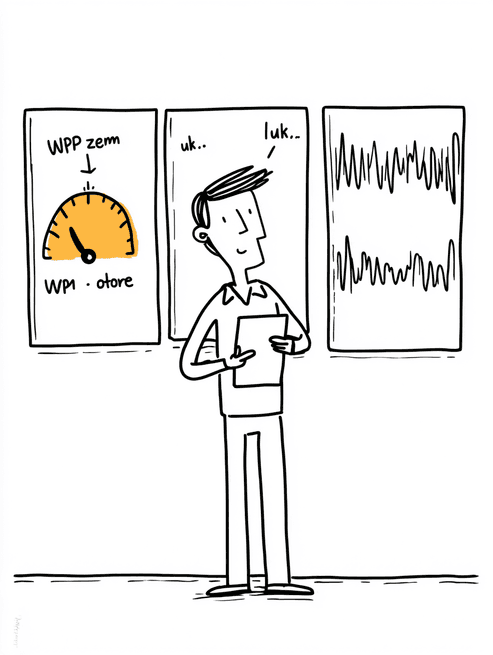
Speaking rate profoundly impacts listener comprehension and perception of the speaker. Research in speech science has established optimal ranges for different contexts:
- Executive Communication: Studies suggest 130-150 WPM as the "executive sweet spot"—fast enough to demonstrate confidence and maintain engagement, yet measured enough to ensure clarity and gravitas. Research indicates that the optimal speech rate for comprehension is around 150-160 words per minute, a speed that allows the brain to follow, process, and retain information efficiently (Rodero, 2023).
- Too Slow (<110 WPM): May be perceived as uncertain, unprepared, or lacking energy. Speaking too slowly poses the risk of loss of attention from listeners.
- Too Fast (>170 WPM): Can overwhelm listeners and reduce comprehension, particularly for complex business topics. Studies show that comprehension can be significantly impacted when passages are delivered at speech rates exceeding 200 WPM (Griffiths, 1990).
ExecReps measures speaking rate with word-level precision using advanced speech-to-text technology, providing users with immediate feedback on their pacing.
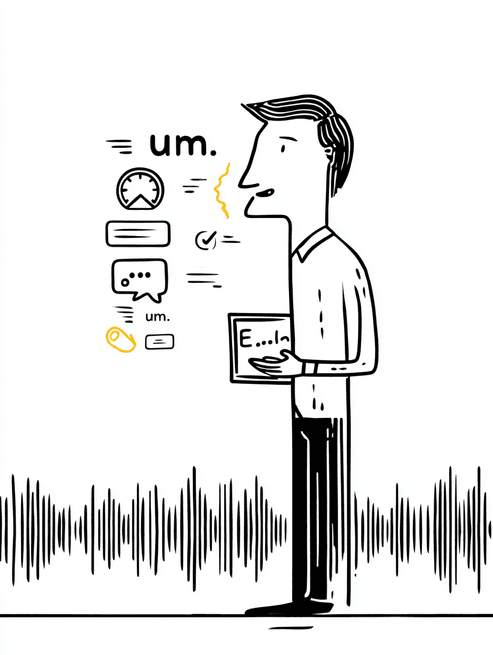
2.1.2 Vocal Fluency and Filler Words
Filler words ("um," "uh," "like," "you know") are universal markers of speech disfluency. Linguistic research shows that while some filler usage is natural in conversational speech, executive communication demands higher standards:
- Executive Polish Standard: ≤2% filler rate (fewer than 2 filler words per 100 words spoken)
- Professional Level: 2-5% filler rate
- Developing Level: >5% filler rate
Research demonstrates that excessive use of fillers in professional presentations can reduce the credibility of the speaker as well as impair comprehension of the message by the audience (Vitello & Rodd, 2022). Studies on vocal fillers show significant impacts on perceived communication competence, professional credibility, and personal credibility (Duvall & Robbins, 2014). Fillers can be distracting and interpreted by listeners as the speaker lacking command of the narrative, while brief, silent pauses tend to be interpreted as demonstrating confidence and control.
The platform's AI analyzes transcripts to identify and quantify filler words, tracking improvement over time. Filler word reduction is one of the most challenging communication skills to master, making it a strong differentiator between novice and expert speakers.
2.1.3 Pause Patterns and Decisiveness
Strategic pausing is a hallmark of confident communication. The platform distinguishes between:
- Natural Pauses (500-1500ms): Brief, intentional breaks that enhance comprehension and create emphasis
- Long Pauses (>2000ms): Extended hesitations that may signal uncertainty or lack of preparation
Research shows that listeners evaluate speakers as less confident when they use filled pauses compared to silent pauses of the same duration (Brennan & Williams, 1995). When it comes to knowledge questions, listeners perceive long pauses as signs of lower knowledge and confidence. Pauses serve multiple functions: physiological (allowing the speaker to breathe), cognitive (allowing planning of speech), and communicative (helping listeners identify demarcations in the speech stream) (Goldman-Eisler, 1968).
By analyzing pause patterns, the system provides insights into decisiveness and vocal confidence—qualities essential for executive presence.
2.1.4 Speech Recognition Confidence
Modern speech recognition systems assign confidence scores to each transcribed word, reflecting acoustic clarity. High confidence scores indicate:
- Clear articulation
- Appropriate volume and projection
- Minimal background noise or acoustic interference
- Professional audio quality
These confidence scores serve as a proxy for vocal clarity, a fundamental component of commanding communication.
2.1.5 Sentiment and Emotional Tone
Advanced AI models can detect sentiment (positive, neutral, negative) and emotional resonance in speech. Positive sentiment correlates with:
- Enthusiasm and passion for the topic
- Audience engagement and inspiration
- Leadership charisma and influence
By tracking sentiment across submissions, the platform helps users understand their emotional impact.
2.2 Content Assessment: AI-Powered Strategic Evaluation
While vocal delivery matters, the substance of what executives communicate is equally critical. ExecReps employs state-of-the-art large language models to evaluate content quality, leveraging recent breakthroughs in natural language understanding and generation.

2.2.1 Rubric-Based Assessment
Each communication exercise includes a profession-specific rubric aligned with real-world business scenarios. For example, a product management workout might evaluate:
- User Empathy: Understanding of customer pain points
- Prioritization: Clear decision-making frameworks
- Metrics Definition: Quantitative success criteria
- Stakeholder Communication: Cross-functional alignment strategies
The AI evaluates responses against these dimensions, providing category-by-category scoring and qualitative feedback.
2.2.2 Profession-Specific Expertise
The platform supports tailored assessment templates for different roles:
- Product Managers: Strategic thinking, roadmap communication, user-centric decision-making
- Sales Leaders: Persuasion techniques, objection handling, value articulation
- Engineers: Technical clarity, trade-off analysis, architectural reasoning
- Executives: Vision communication, stakeholder management, high-level strategy
This customization ensures feedback is relevant and actionable for each user's professional context.
2.2.3 Holistic Scoring
The platform combines vocal delivery metrics with content quality to produce comprehensive assessments. This dual-lens approach recognizes that executive communication requires both "what you say" and "how you say it."
2.3 Statistical Methods and Population Normalization
To ensure fair comparison across users, the platform employs rigorous statistical techniques:
2.3.1 Z-Score Normalization
Individual performance is compared to population distributions using z-scores, which account for:
- Mean Performance: Average scores across the user base
- Standard Deviation: Variability in the population
- Percentile Rankings: Relative standing (e.g., top 10%, top 25%)
This prevents score inflation and ensures that metrics remain meaningful as the platform scales.
2.3.2 Linear Regression for Growth Tracking
The platform uses linear regression to detect improvement trajectories, analyzing recent performance to identify:
- Upward Trends: Consistent skill development
- Plateaus: Opportunities for coaching intervention
- Variability: Inconsistency that may require focused practice
This statistical approach rewards users for growth, not just current performance—a critical motivational mechanism supported by behavioral science research.
2.3.3 Logarithmic Scaling for Volume Rewards
To incentivize consistent practice while preventing system gaming, the platform employs logarithmic scaling for volume-based recognition. This approach:
- Rewards early practice significantly
- Creates diminishing returns to prevent exploitation
- Encourages sustainable, long-term engagement
3. The Multi-Dimensional Assessment Framework
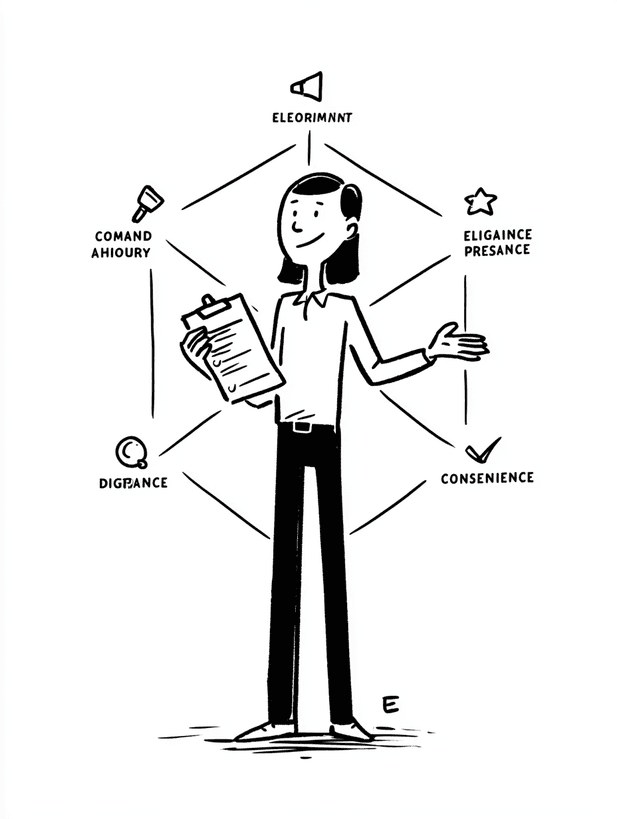
Rather than reducing communication to a single score, ExecReps evaluates performance across complementary dimensions. This multi-dimensional approach reflects the complexity of executive communication and provides granular, actionable insights.
3.1 Command & Authority
This dimension measures the clarity, decisiveness, and confidence projected through voice. Key indicators include:
- Clarity: Speech recognition confidence as a proxy for articulation quality
- Pace Control: Speaking rate within optimal ranges for executive contexts
- Decisiveness: Minimal hesitation and strategic pause placement
Scientific Basis:Research in leadership psychology shows that vocal authority—projected through clear, measured speech—significantly influences perceptions of competence and trustworthiness. Studies demonstrate that voice pitch alone is sufficient to influence trust-related perceptions, with individuals perceived as trustworthy being preferred in leadership roles (O'Connor & Barclay, 2017). Voice characteristics significantly impact social perception and leadership assessment across various contexts.
3.2 Eloquence & Fluency
Eloquence captures the polish and articulacy of speech. This is the most challenging dimension to master and includes:
- Filler Minimization: Low rates of verbal clutter ("um," "uh," "like")
- Flow Quality: Natural rhythm and smooth transitions
- Articulation: Precise pronunciation and word boundaries
Scientific Basis: Linguistic studies demonstrate that filler word frequency inversely correlates with perceived expertise. Reducing fillers requires extensive practice and conscious self-monitoring, making it a strong indicator of communication mastery.
3.3 Engagement & Presence
This dimension evaluates the speaker's ability to captivate and maintain listener attention through:
- Emotional Resonance: Positive sentiment and passionate delivery
- Energy: Sustained pace and vocal variety
- Dynamics: Modulation through pause variance and tonal shifts
Scientific Basis: Neuroscience research on audience attention shows that vocal variety activates multiple brain regions, enhancing engagement and information retention. Monotone delivery, by contrast, triggers cognitive disengagement. Research demonstrates that vocal variety—variations in vocal pitch, rate of speech, vocal intensity, and tone quality—increases audience attention span and improves listener comprehension, with 80% of top engaging speakers also having the most dynamic voices (Quantified Communications, 2015).
3.4 Consistency & Mastery
Consistency measures reliability across different contexts and scenarios:
- Stability: Low variance in delivery quality
- Versatility: Performance across diverse communication types (pitches, updates, negotiations)
- Adaptability: Sustained competency under different conditions
Scientific Basis: Skill acquisition research emphasizes that true mastery requires consistent performance across varied conditions. Variability indicates developing competency, while stability signals internalized expertise.
4. Behavioral Science and Growth Mechanics
ExecReps integrates behavioral psychology principles to maximize skill development and user engagement.

4.1 Growth-Oriented Feedback
Traditional assessment systems often focus solely on current performance, which can demotivate learners. The platform incorporates improvement trajectory as a core component of evaluation, recognizing that growth matters as much as absolute ability.
Scientific Basis:Carol Dweck's growth mindset research demonstrates that progress-focused feedback enhances motivation, persistence, and ultimate achievement (Dweck, 2006). Students who believed their intelligence could be developed (a growth mindset) outperformed those who believed their intelligence was fixed. Praising effort rather than intelligence fosters continued motivation and engagement. By rewarding improvement, the platform supports a growth orientation.
4.2 Deliberate Practice Principles
The platform's workout structure reflects Anders Ericsson's research on deliberate practice (Ericsson, Krampe, & Tesch-Römer, 1993):
- Specific Goals: Each workout targets defined skills (e.g., filler reduction, strategic prioritization)
- Immediate Feedback: AI assessment provides rapid, detailed insights
- Incremental Challenge: Users progress through scenarios of increasing complexity
- Repetition with Variation: Diverse workouts prevent skill stagnation
Ericsson's research on expert performance across domains such as music, chess, and sports emphasizes extended deliberate practice—high concentration practice beyond one's comfort zone—as the primary mechanism through which individuals acquire superior performance.
4.3 Gamification and Intrinsic Motivation
The platform incorporates motivational design elements grounded in self-determination theory (Deci & Ryan, 2000):
- Competence: Clear metrics show mastery development
- Autonomy: Users choose workouts aligned with their goals
- Progress Visibility: Trend tracking and milestone celebrations
- Identity Formation: Archetype system creates aspirational identity investment
Self-determination theory proposes that all human beings have three basic psychological needs—autonomy, competence, and relatedness—the satisfaction of which are essential for effective functioning and wellness. Conditions supporting these needs foster the most volitional and high-quality forms of motivation and engagement, including enhanced performance, persistence, and creativity.
5. Technology Foundation: Enterprise-Grade AI Infrastructure
ExecReps leverages cutting-edge artificial intelligence systems that represent the state-of-the-art in both speech recognition and natural language understanding. Our technology infrastructure is built on proven, enterprise-grade AI models that power conversation intelligence systems across Fortune 500 companies.
5.1 Advanced Speech Recognition Technology
The platform employs industry-leading automatic speech recognition (ASR) systems that deliver exceptional accuracy across diverse acoustic conditions:
Performance Benchmarks:
- 93.4% word accuracy across standard English speech
- 6.6% word error rate (WER), representing top-tier performance in the industry
- 30% reduction in hallucination rates compared to alternative models, ensuring transcription reliability
- Validated across 250+ hours of audio data and 26 distinct datasets spanning call centers, webinars, podcasts, and executive presentations
Capabilities:
- Word-Level Precision: Each transcribed word includes confidence scoring for granular quality assessment
- Acoustic Feature Extraction: Automated detection of speaking rate, pause patterns, and filler words
- Sentiment Classification: Emotional tone analysis with confidence weighting
- Multi-Domain Robustness: Consistent performance across noisy environments, varied accents, and diverse speaking styles
- Scalable Processing: Enterprise architecture supporting thousands of concurrent analyses
Technical Differentiation: The speech recognition technology powering ExecReps has demonstrated up to 40% higher accuracy than competing models in independent benchmarks, particularly in challenging conditions involving executive presentations, business jargon, and strategic terminology.
5.2 Large Language Model Assessment Engine
For strategic content evaluation, the platform integrates frontier-class large language models (LLMs) representing the latest advances in artificial intelligence:
- Contextual Business Understanding: Deep comprehension of strategic frameworks, business models, and executive communication patterns
- Rubric-Driven Evaluation: Structured assessment against profession-specific criteria with category-level scoring
- Qualitative Coaching Feedback: Generation of actionable, personalized improvement recommendations
- Consistency at Scale: Reproducible assessment quality across unlimited users and scenarios
- Multi-Turn Reasoning: Complex evaluation requiring synthesis of multiple communication dimensions
Technical Architecture: The content assessment system employs transformer-based neural networks with hundreds of billions of parameters, enabling nuanced evaluation that approaches human expert-level coaching quality while maintaining instant availability and consistent standards.
5.3 Conversation Intelligence Integration
ExecReps incorporates principles from the rapidly-growing conversation intelligence market, which is projected to reach $49.52 billion by 2032. Research shows that 97% of executives report that conversational AI positively influences organizational outcomes, with measurable improvements in:
- Team Performance: 94% report boosted productivity
- Issue Resolution: 92% achieve faster problem-solving
- Cost Optimization: 65% realize measurable cost reductions
The platform applies these proven conversation intelligence methodologies to executive communication development:
- Call Duration & Complexity Analysis: Evaluate interaction efficiency and communication clarity
- Real-Time Insights: Enable immediate feedback on communication patterns (80%+ of organizations identify this as the most transformative capability for 2025)
- Quality Management Metrics: Track improvement trajectories and coaching effectiveness
- Voice of the Customer (VoC): Capture authentic communication patterns for unfiltered feedback
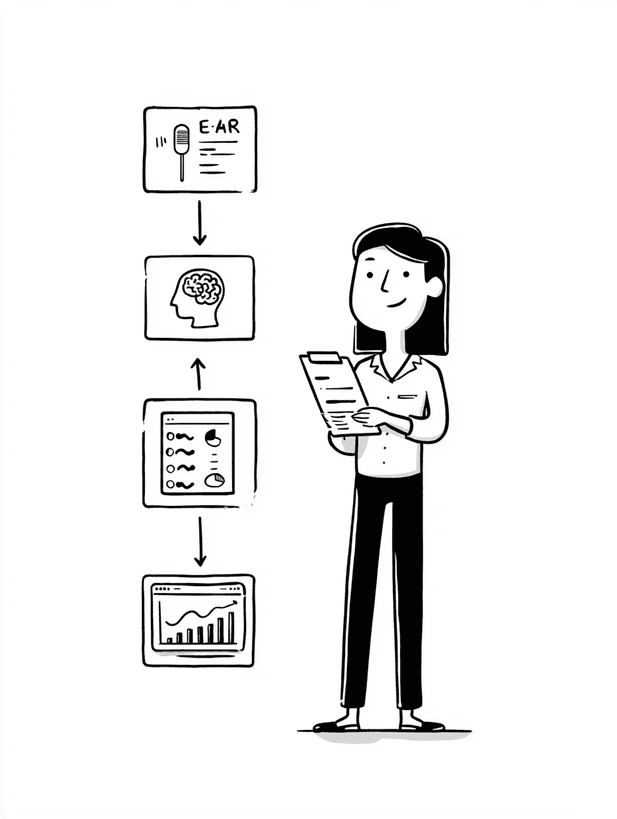
5.4 Multi-Stage Assessment Pipeline
The platform seamlessly orchestrates multiple AI systems through an integrated architecture:
- Audio Capture: Users record or upload spoken responses in various formats
- Speech-to-Text Transcription: Enterprise ASR processes audio with 93.4% accuracy, extracting acoustic metrics
- Strategic Content Analysis: Large language models evaluate transcripts against workout-specific rubrics
- Score Synthesis: Proprietary algorithms combine delivery metrics (acoustic) with content quality (semantic)
- Feedback Dashboard: Multi-dimensional visualization with actionable improvement pathways
Processing Speed: The entire pipeline—from audio upload to comprehensive feedback—completes in 30-90 seconds for typical 2-minute submissions, enabling immediate learning cycles.
Quality Assurance: Multiple validation layers ensure consistency:
- Acoustic analysis validated against ground-truth labeled datasets
- Content assessment cross-checked for rubric adherence and score calibration
- Outlier detection identifies anomalous submissions for review
- Continuous model monitoring ensures sustained performance
This integrated approach ensures both vocal performance and strategic substance receive thorough, objective evaluation at scale.
6. Applications and Potential Impact
6.1 Individual Professional Development
For individual users, the platform provides:
- Objective Self-Assessment: Data-driven understanding of communication strengths and weaknesses
- Targeted Improvement: Specific, measurable goals for skill development
- Credential Building: Shareable metrics for LinkedIn profiles and resumes
- Career Advancement: Enhanced executive presence for promotion readiness
Potential Impact: Democratizes access to executive communication coaching, previously available only through expensive ($300+/session) one-on-one coaching.
6.2 Corporate Training Programs
Organizations can leverage the platform for:
- Scalable Leadership Development: Train hundreds of managers simultaneously
- Performance Benchmarking: Track communication competency across teams
- Promotion Readiness: Objective criteria for evaluating leadership potential
- Sales Enablement: Improve pitch quality and client-facing communication
Potential Impact:Transforms subjective "executive presence" assessments into data-driven talent development.
6.3 Educational Institutions
Universities and business schools can integrate the platform for:
- MBA Communication Courses: Supplement traditional instruction with data-driven practice
- Executive Education: Provide quantified feedback to senior leaders
- Research Applications: Generate datasets for communication science research
Potential Impact: Bridges academic learning and real-world communication skills with measurable outcomes.
6.4 Recruitment and Hiring
Forward-thinking organizations may use the platform for:
- Candidate Evaluation: Assess communication competency objectively
- Interview Preparation: Help candidates improve before high-stakes conversations
- Role-Specific Assessment: Verify communication skills match position requirements
Potential Impact: Reduces bias in hiring decisions by supplementing subjective impressions with objective data.

7. Ethical Considerations and Fairness
7.1 Accent and Language Diversity
The platform recognizes that communication competency transcends accent. While speech recognition confidence may vary based on accent, the system:
- Focuses on clarity of delivery, not accent neutrality
- Provides context-aware baselines for non-native English speakers
- Emphasizes controllable factors (filler words, pacing, structure)
Commitment: Ongoing bias audits ensure equitable assessment across linguistic backgrounds.
7.2 Disability Accommodations
Speech impediments and disabilities may affect vocal metrics unfairly. The platform offers:
- Accommodation flags for adjusted assessment
- Manual review options for users with speech challenges
- Alternative evaluation pathways when appropriate
Commitment: Communication competency assessment should be accessible to all professionals.
7.3 Transparency and User Control
Users maintain control over their data:
- Privacy Settings: Granular control over what information is shared
- Verification System: Cryptographic hashing ensures score authenticity
- Data Usage: Clear policies on how performance data is utilized
Commitment: Users own their communication development data and decide how it is used.
8. Future Directions: The Evolution of Communication Science
8.1 Multi-Modal Analysis
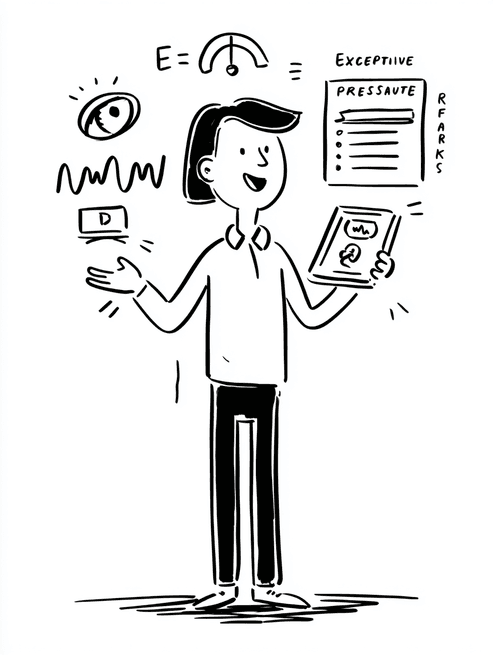
Future development may incorporate:
- Video Analysis: Body language, eye contact, gesture quality
- Facial Expression Recognition: Emotional authenticity and congruence
- Posture Evaluation: Non-verbal confidence signals
Potential:Holistic "Executive Presence Score" combining vocal, verbal, and visual dimensions.
8.2 Real-Time Coaching
Emerging capabilities include:
- Live Feedback: Real-time filler word detection during practice
- Pacing Guidance: Visual indicators for speaking rate adjustment
- Interactive AI Coaching: Conversational follow-up on assessments
Potential: Shift from retrospective analysis to proactive skill development during practice.
8.3 Personalized Learning Pathways
Machine learning can enable:
- Adaptive Difficulty: Workouts that adjust to user skill level
- Predictive Analytics: Identify optimal practice schedules
- Customized Recommendations: AI-driven workout sequencing
Potential: Personalized communication curricula that maximize learning efficiency.
8.4 Cross-Cultural Communication
Expanding beyond English to support:
- Multilingual Analysis: Spanish, Mandarin, French, German, Japanese
- Cultural Norms: Context-appropriate communication standards
- Global Benchmarking: Compare performance within cultural contexts
Potential: Serve the 2+ billion global professionals developing communication skills.
9. Conclusion: The Future of Communication Development
ExecReps represents a paradigm shift in how professionals develop executive communication skills. By applying rigorous scientific methods—acoustic analysis, AI assessment, statistical modeling, and behavioral psychology—the platform transforms subjective coaching into objective, measurable practice.
Key Scientific Contributions:
- Quantification: Establishes measurable metrics for previously subjective skills
- Standardization: Creates comparable benchmarks across individuals and organizations
- Scalability: Makes expert-level coaching accessible to all professionals
- Evidence-Based: Grounds assessment in acoustic science and linguistic research
- Growth-Oriented: Applies behavioral science to maximize skill development
The Potential Impact:
As organizations increasingly operate in distributed, digital environments, communication competency becomes more critical than ever. Clear, confident, and strategic communication separates high-potential leaders from the crowd. By making these skills measurable and trainable, ExecReps has the potential to:
- Democratize Leadership Development: Provide world-class coaching to millions
- Reduce Bias: Replace subjective impressions with objective data
- Accelerate Careers: Help professionals develop executive presence faster
- Transform Organizations: Build cultures of communication excellence
The science is clear: communication is a learnable skill, not an innate talent. With the right tools, feedback, and practice, any professional can develop executive-level presence. ExecReps provides those tools, grounded in the latest advances in artificial intelligence, acoustic science, and behavioral psychology.
The future of communication development is data-driven, accessible, and scientifically rigorous. That future is here.
10. Workout Personalisation Science
How ExecReps moves beyond a flat workout library to recommend the right exercise, at the right difficulty, at the right time. All powered by research-backed algorithms instead of guesswork.
Read the full deep-dive: Personalisation Engine Science | Skill Taxonomy Methodology
10.1 The Problem: A Flat Workout Library
Most communication-training platforms present a static catalogue of exercises. Users scroll, pick something that looks interesting, and hope it suits their level. This creates three failure modes:
- Too easy: Users repeat comfortable scenarios and plateau
- Too hard: Users attempt advanced exercises, score poorly, and disengage
- No guidance: Without a coach pointing to the next best workout, practice is unstructured
ExecReps solves this with a Personalisation Engine (PE), an algorithmic layer that ranks every workout for every user, every time they open the library.
10.2 Research Foundations
The engine draws on three pillars of learning science:
Three Research Pillars:
- Bayesian Knowledge Tracing (BKT): Originated at Carnegie Mellon, BKT models a learner's probability of mastery for each skill after every practice attempt. This enables the system to know what a user needs to work on (Corbett & Anderson, 1995).
- Spaced Repetition & FSRS: Ebbinghaus's forgetting curve (1885) shows memory decays exponentially without review. Modern Free Spaced Repetition Scheduler (FSRS) algorithms compute optimal review intervals so skills are revisited just before they fade.
- Zone of Proximal Development (ZPD): Vygotsky (1978) demonstrated that learning is maximised when tasks sit just beyond current ability. Challenging enough to stretch, but not so hard they overwhelm.
10.3 The 5-Factor Scoring Model
Every workout receives a composite relevance score from five weighted factors. The weights were tuned on early cohort data and reviewed against engagement metrics:

Factor Weights:
- Skill Match, 40 %: How well the workout's skill labels align with the user's weakest areas (BKT-derived mastery probabilities)
- Difficulty Fit, 25 %: Proximity to the user's ZPD. Workouts scored highest when difficulty sits just above demonstrated ability
- Freshness, 20 %: Time since last practice of the same skill cluster, driven by FSRS decay curves
- Role Relevance, 10 %: Alignment with the user's stated profession and archetype
- Exploration, 5 %: A controlled random factor that surfaces novel workouts to prevent filter bubbles
10.4 Skill Taxonomy

To match workouts to user needs, we built a structured taxonomy of communication skills:
- 141 skill labels distilled into 8 high-level dimensions
- Sources: O*NET occupational database, World Economic Forum Future of Jobs framework, and internal workout metadata
- Labels were clustered using Gemini text-embedding cosine similarity, achieving 0.834 average intra-cluster similarity
The taxonomy allows the engine to generalise. If a user struggles with "objection handling" in a sales workout, the system infers related weaknesses in "persuasion" and "stakeholder negotiation" within the same dimension. Read the full methodology: Skill Taxonomy Methodology.
10.5 Cold Start: Challenge Picker & Confidence Sliders
New users have no submission history, so the engine cannot compute BKT mastery or FSRS decay. The cold-start flow solves this in two steps:
- Challenge Picker: Users select their top professional challenges from a curated list, seeding initial skill-gap estimates
- Confidence Sliders: Self-rated confidence across the 8 skill dimensions provides prior probabilities for BKT
During the cold-start window, the exploration factor is boosted to 0.30(6 × normal) so the engine gathers signal quickly across diverse workout types.

10.6 Why No LLM (Yet)

While ExecReps uses GPT-4 for content assessment, the personalisation engine deliberately avoids LLMs for ranking. Three reasons:
- Determinism: The same user state must always produce the same ranking. LLM outputs vary between calls, making A/B testing and debugging unreliable.
- Cost: Ranking 200+ workouts per page-load with an LLM would cost ~$0.05/request. The deterministic scorer runs in <20 ms at near-zero marginal cost.
- Data moat: Every submission refines BKT parameters and FSRS intervals. This proprietary dataset compounds over time and cannot be replicated by swapping in a different LLM.
LLMs may be introduced later for natural-language explanations ("We recommend this workout because…"), but the core ranking will remain deterministic.
10.7 What's Live Today
The personalisation engine has been shipping iteratively:
Release Timeline:
- PE-1: Skill taxonomy (141 labels → 8 dimensions) and workout tagging
- PE-2: Cold-start onboarding (Challenge Picker + Confidence Sliders)
- PE-3: 5-factor scoring model with BKT mastery and FSRS freshness
- PE-4: Retrofit survey for existing users to seed personalisation data
Each release is measured against workout completion rate, 7-day return rate, and average score improvement per user.
References
Brennan, S. E., & Williams, M. (1995). The feeling of another's knowing: Prosody and filled pauses as cues to listeners about the metacognitive states of speakers. Journal of Memory and Language, 34(3), 383-398.
Corbett, A. T., & Anderson, J. R. (1995). Knowledge tracing: Modeling the acquisition of procedural knowledge. User Modeling and User-Adapted Interaction, 4(4), 253-278.
Deci, E. L., & Ryan, R. M. (2000). The "what" and "why" of goal pursuits: Human needs and the self-determination of behavior. Psychological Inquiry, 11(4), 227-268.
Duvall, E., & Robbins, A. (2014). The effect of vocal fillers on credibility, communication competence, and likability. Proceedings of the Student Research Symposium, Brigham Young University.
Dweck, C. S. (2006). Mindset: The new psychology of success. Random House.
Ebbinghaus, H. (1885). Über das Gedächtnis: Untersuchungen zur experimentellen Psychologie [Memory: A Contribution to Experimental Psychology]. Duncker & Humblot.
Ericsson, K. A., Krampe, R. T., & Tesch-Römer, C. (1993). The role of deliberate practice in the acquisition of expert performance. Psychological Review, 100(3), 363-406.
Goldman-Eisler, F. (1968). Psycholinguistics: Experiments in spontaneous speech. Academic Press.
Griffiths, R. (1990). Speech rate and NNS comprehension: A preliminary study in time-benefit analysis. Language Learning, 40(3), 311-336.
O'Connor, J. J. M., & Barclay, P. (2017). The influence of voice pitch on perceptions of trustworthiness across social contexts. Evolution and Human Behavior, 38(4), 506-512.
Quantified Communications. (2015). The science of audience engagement. Retrieved from https://quantified.ai/blog/the-science-of-audience-engagement/
Rodero, E. (2023). Analysis of speech rate. Research project findings. Retrieved from https://emmarodero.com/researcher/projects/speech-rate/
SNS Insider. (2025). Conversation intelligence software market research report. Globe Newswire. Retrieved from https://www.globenewswire.com/news-release/2025/11/07/
Vitello, S., & Rodd, J. M. (2022). We, um, have, like, a problem: Excessive use of fillers in scientific speech. Advances in Physiology Education, 46(3), 568-574.
Vygotsky, L. S. (1978). Mind in Society: The Development of Higher Psychological Processes. Harvard University Press.
Methodological Foundations
The ExecReps methodology synthesizes research from multiple disciplines:
- Speech Science: Acoustic analysis of vocal characteristics and their perception in communication contexts
- Linguistics: Filler word patterns, pause analysis, and their relationship to perceived expertise
- Psychology: Growth mindset theory, deliberate practice principles, and skill acquisition research
- Behavioral Science: Self-determination theory, gamification, and intrinsic motivation frameworks
- Conversation Intelligence: Industry best practices from the $49.52B projected market for AI-powered communication analysis
- Machine Learning: Natural language processing and automatic speech recognition systems achieving 93.4% word accuracy
- Statistics: Z-score normalization, linear regression for growth tracking, and population-based benchmarking
The platform continues to evolve as new research emerges, ensuring our methods reflect the latest scientific understanding of human communication and AI-powered assessment technology.
Version: 3.0
Date: November 2025
Classification: Public - Marketing Use
Purpose: Scientific communication of ExecReps methodology backed by peer-reviewed research
Updates:
- Version 3.0 adds comprehensive academic references and peer-reviewed research citations
- Version 2.0 removed specific technology vendor references while incorporating industry benchmark data
- Version 1.0 initial scientific whitepaper
Contact: For inquiries about the science and methodology, visit execreps.ai
ExecReps: Where Science Meets Communication Excellence