
The Dynamics Matrix: Why Team Communication Is a Relationship Problem
How archetype pairings create synergy, creative tension, and everything in between
Here's something most communication training gets wrong: they focus on individuals. "Be a better listener." "Speak with more confidence." "Use open body language." All fine advice — and all missing the point.
Communication doesn't happen in a vacuum. It happens between people. And the quality of that interaction depends far more on the relationship between two communication styles than on either style alone.
That's why we built the Dynamics Matrix.
Ready to develop your team's voice?
Start a free trial →What the Dynamics Matrix Shows You
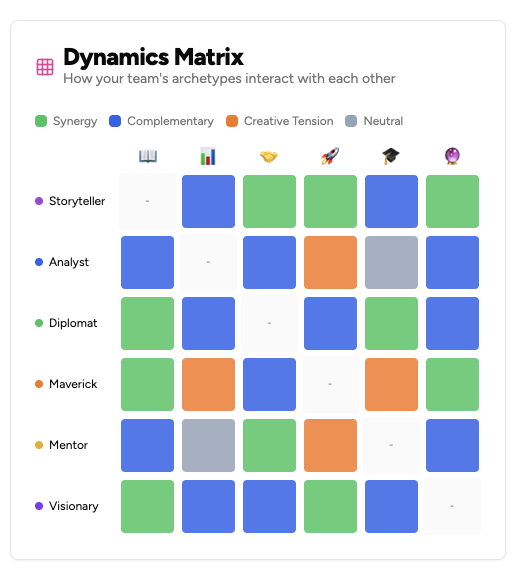
The Dynamics Matrix maps every possible pairing of ExecReps' eight communication archetypes — Storyteller, Analyst, Diplomat, Maverick, Mentor, Visionary, Commander, and Connector — and classifies the dynamic between them into one of four types:
- 🟢 Synergy — These pairs amplify each other. They share natural alignment in values or approach, creating effortless collaboration.
- 🔵 Complementary — These pairs fill each other's gaps. Where one is weak, the other is strong. High potential, but requires awareness.
- 🟠 Creative Tension — These pairs challenge each other. Different approaches create friction — but that friction, managed well, produces the most innovative work.
- ⬜ Neutral — These pairs neither amplify nor challenge. They coexist without natural chemistry, requiring intentional connection.
Why This Matters for Real Teams
Think about the last time a project stalled. Was it a skills gap? Usually not. It was a communication dynamic that nobody could name.
The Analyst who kept asking for more data while the Storyteller wanted to run with the narrative. The Commander who pushed for a decision while the Diplomat wanted more consensus. These aren't personality conflicts — they're predictable archetype dynamics.
Once you can see them on the matrix, you can work with them instead of against them.
Synergy Pairs: Your Secret Weapons
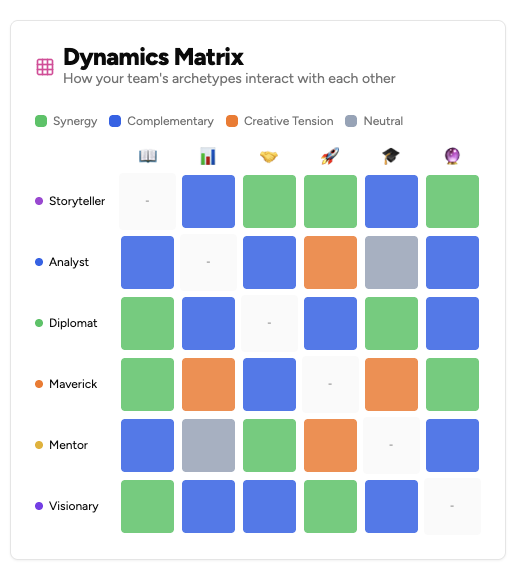
Synergy pairs — like Storyteller + Diplomat, or Mentor + Connector — are your team's natural collaboration corridors. These people don't need much structure to work well together. They gravitate toward productive interaction.
The leadership move: put synergy pairs on high-stakes, time-pressured work. They'll execute without friction when you need speed most.
Creative Tension Pairs: Your Innovation Engine
Creative Tension pairs — like Analyst + Maverick, or Commander + Diplomat — are where the most interesting work happens. These pairs see problems from fundamentally different angles.
Unmanaged, this tension becomes conflict. Managed, it becomes your team's greatest competitive advantage.
Related Posts
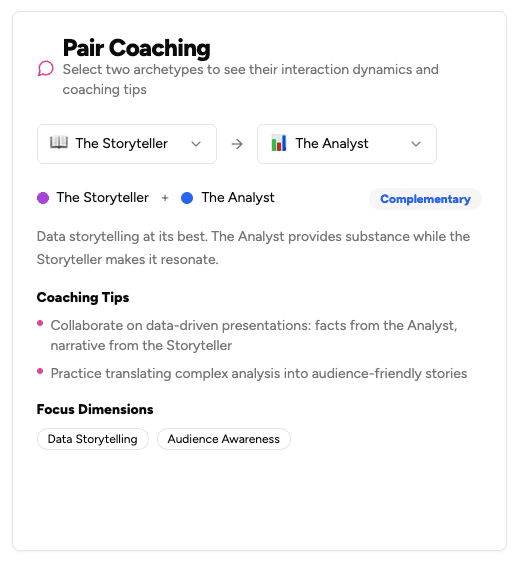
28 Coaching Conversations Your Team Should Be Having (But Aren't)
Every pair of communication archetypes has a unique coaching dynamic. We mapped all 28 combinations with ready-to-use 3-point agendas that turn any two teammates into growth partners.
4 min read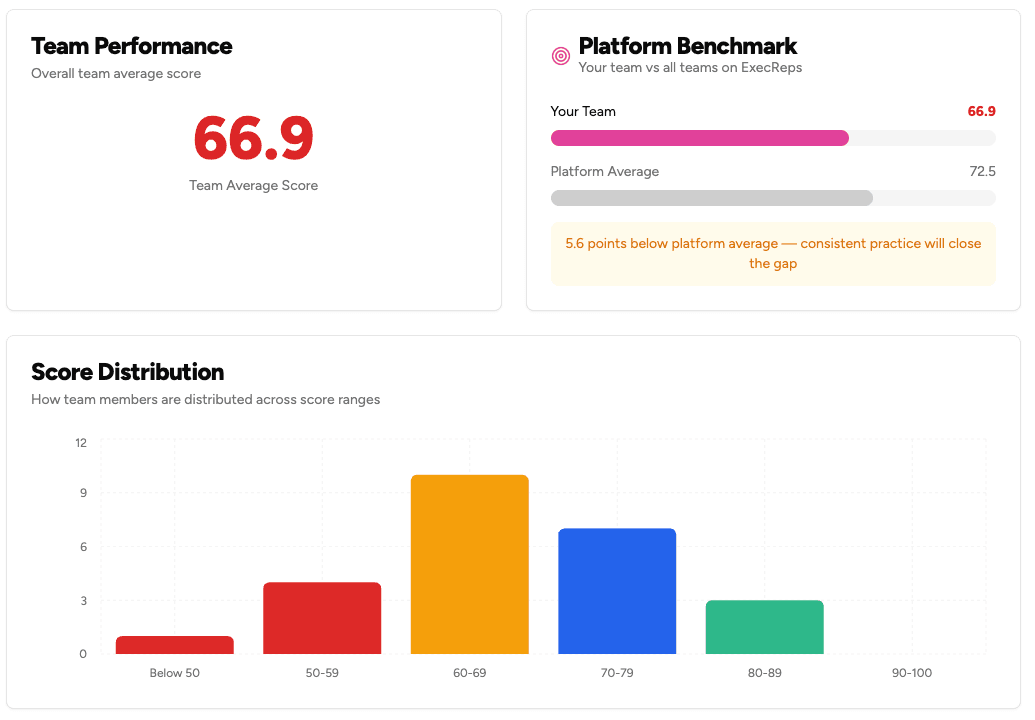
The Dashboard That Changes Everything: Why Team Communication Analytics Matter
Most teams fly blind on communication quality. ExecReps Team Analytics gives leaders the visibility to spot patterns, close gaps, and build genuine communication culture — not just hope for it.
5 min readGet insights from The Lab
Weekly research on voice science, executive communication, and leadership development. No spam, unsubscribe anytime.