Do We Have a Communication Problem? 7 Signs Your Team Has a Skills Gap Hiding in Plain Sight
Part 1 of The Champion's Playbook Series
Do We Have a Communication Problem? 7 Signs Your Team Has a Skills Gap Hiding in Plain Sight
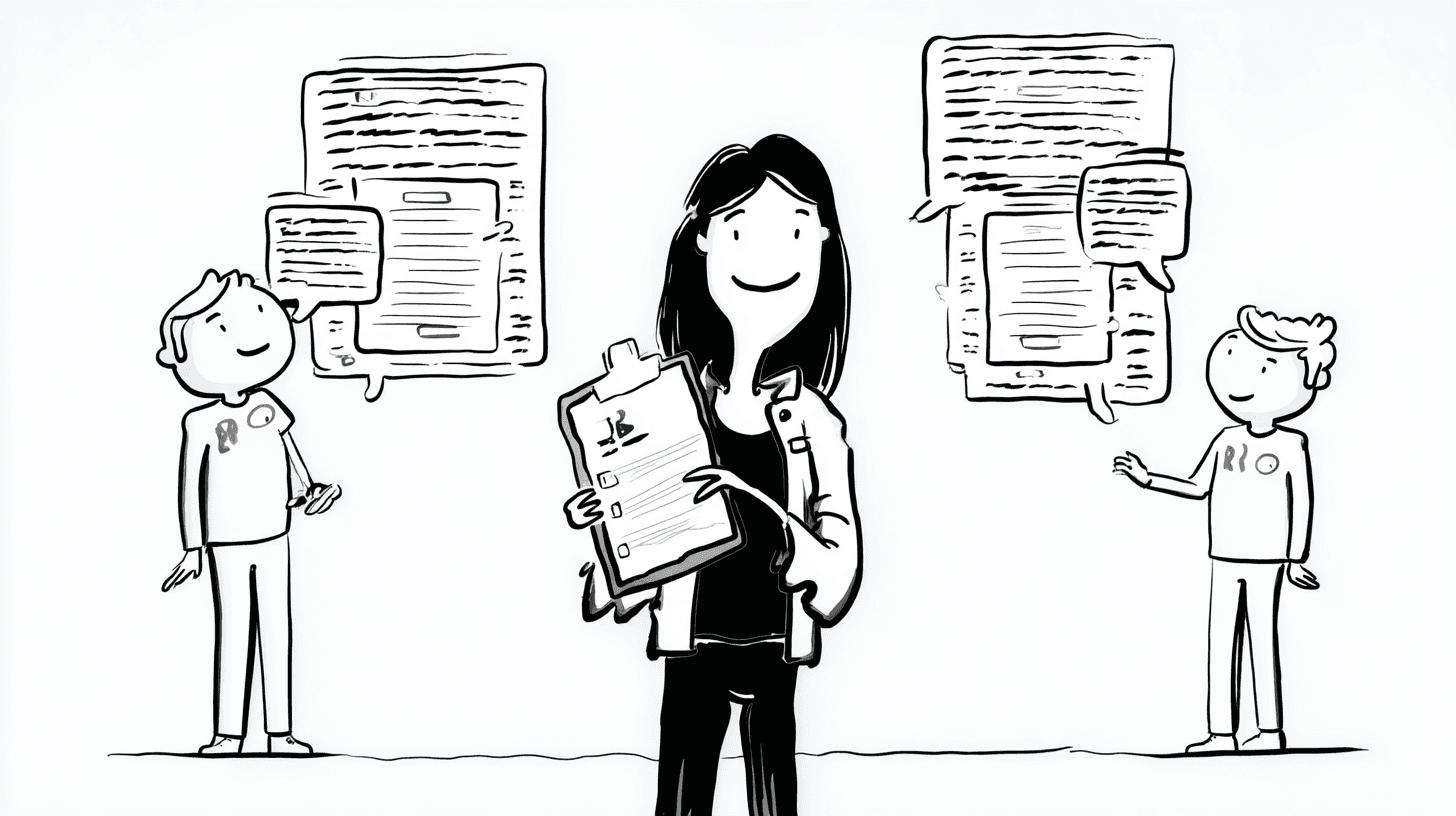
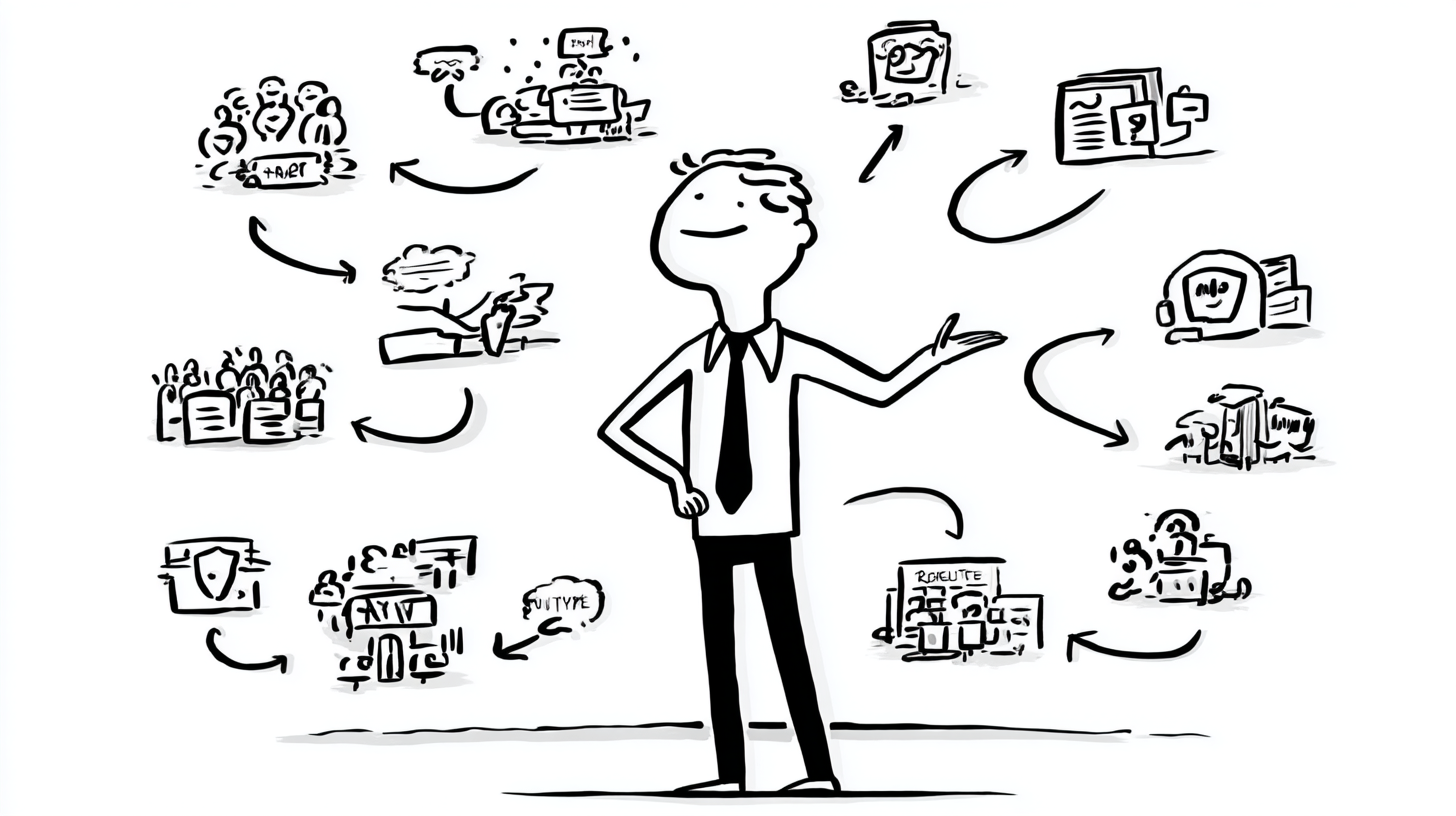
You have a senior engineer who builds systems that save the company millions — but in every leadership meeting, she defers to a louder colleague who rephrases her ideas. You have an analyst whose insights are razor-sharp on paper but vanish into a wall of bullet points during stakeholder reviews. You have a team full of smart, capable people who somehow keep getting passed over for the next level.
The problem isn’t talent. It’s never been talent. The problem is that no one ever taught them how to make their talent heard.
Communication skills gaps don’t announce themselves with flashing lights. They hide inside “quiet” meetings, bloated slide decks, and performance reviews that say “needs more executive presence” without ever explaining what that means. And because the gap is invisible, it’s easy to blame the people instead of the system.
Ready to develop your team's voice?
Start a free trial →This post is a diagnostic. If you’re an HR leader, a team lead, or a department head who suspects your team’s communication skills aren’t keeping pace with their technical abilities — read on. You’re not imagining it. And you’re not alone.
The Invisible Cost No One Is Measuring
Here’s the uncomfortable math: 70% of promotions hinge on communication skills, not technical ability. And yet 0% of mid-level professionals receive structured communication development after onboarding. Zero.
Think about what that means for your organization. You’re investing in technical upskilling, certifications, and domain training — all of which matter — while leaving the single biggest predictor of career advancement completely untouched.
The costs compound silently:
- Ideas die in meetings. A promising product direction gets dismissed not because it’s wrong, but because it was presented poorly. The team moves on. Six months later, a competitor launches the same idea.
- Promotions stall. Your strongest individual contributors hit a ceiling — not because they lack leadership potential, but because they can’t demonstrate it in the rooms where decisions are made.
- Projects get misattributed. The person who presents the work gets credit. The person who did the work watches from the back of the room.
- Diverse talent walks out the door. High performers from underrepresented backgrounds leave for companies where they feel heard — and you tell yourself it was about compensation.
None of this shows up in a dashboard. There’s no line item for “revenue lost to poor stakeholder communication” or “attrition caused by feeling invisible.” But the cost is real, and if you’ve been in your role long enough, you can feel it.
7 Signs Your Team Has a Communication Skills Gap
Not sure if this applies to you? Here’s a practical checklist. If three or more of these sound familiar, you’re looking at a systemic gap — not an individual performance issue.
1. Your Top Performers Plateau at the Same Level
You keep promoting strong ICs into senior roles, but they stall before the director or VP level. Feedback is vague: “They’re not ready yet” or “They need more visibility.” The pattern repeats across the team, which means it’s not about any one person — it’s a development gap in communication and presence.
2. Meetings Are Dominated by the Same Three People
You know exactly who will speak in your next all-hands or strategy review. The rest of the room goes quiet — not because they have nothing to say, but because they haven’t developed the skill (or confidence) to command airtime in group settings. Research shows that professionals who are 2.5x more likely to be promoted share one trait: strong executive presence. Your silent contributors aren’t less capable. They’re less practiced.
3. Stakeholder Updates Are Confusing or Way Too Long
When your team presents to senior leadership or cross-functional partners, the updates run long. Executives check their phones. Questions reveal that the core message didn’t land. The post-meeting feedback is always some version of: “Can you just give me the bottom line?” This isn’t a slide design problem. It’s a concise messaging problem.
4. Client-Facing Roles Struggle with Executive Audiences
Your customer success managers or account leads are great with day-to-day contacts — but put them in front of a client’s VP and the dynamic shifts. They over-explain, under-structure, and lose the room. These aren’t nervous amateurs. They’re skilled professionals who were never trained to adjust their communication for a senior audience.
5. Post-Meeting Slack Is Where the Real Discussion Happens
The meeting ends. Thirty seconds later, your Slack channel lights up: “What I was trying to say was…” or “I think what they meant is…” If the real conversation only happens in text after the meeting, your team is more articulate in writing than in speech. That’s a solvable gap.
6. Performance Reviews Keep Saying the Same Thing
Pull up your last review cycle. Search for phrases like “needs to be more visible,” “should speak up more,” “could improve executive presence,” or “would benefit from more confidence in presentations.” If you’re seeing this across multiple reviews — especially for high-performing ICs — you’re looking at a training gap, not a personality trait.
7. You’re Losing Diverse Talent Who Feel Unheard
This is the sign that matters most and gets discussed least. When employees from underrepresented backgrounds consistently report feeling talked over, overlooked, or unable to break into key conversations, the problem isn’t their ambition. It’s an environment that rewards one communication style and leaves everyone else behind. Exit interview data often reveals this pattern long after it’s too late to act.
Why Traditional Solutions Aren’t Working
If you’ve recognized your team in the list above, you’ve probably already tried something. Here’s why the usual approaches fall short:
Toastmasters and Public Speaking Clubs
Toastmasters is valuable for general public speaking confidence — but it’s not designed for the kinds of communication that drive business outcomes. Your team doesn’t need to give better wedding toasts. They need to nail a 90-second stakeholder update, push back on a bad idea in a cross-functional meeting, and land a business case with a skeptical CFO. Generic practice doesn’t transfer to specific, high-stakes professional scenarios.
One-Off Workshops and Courses
A two-day communication workshop generates short-term enthusiasm and long-term nothing. Research on skill acquisition is clear: without repeated practice and feedback, new behaviors don’t stick. Your team leaves the workshop energized, returns to their desks, and within two weeks they’re back to old habits. Passive learning doesn’t build muscle memory.
Executive Coaching
Executive coaching works — when it’s available. At $500–$1,000 per hour, most organizations reserve coaching for the C-suite or a handful of high-potential leaders. That leaves the vast majority of your team without any structured communication development at all. 93% of hiring decisions are influenced by communication skills, but only a sliver of the workforce gets coached on them.
The Common Thread
Every traditional solution shares the same flaw: they don’t scale. You can’t send 50 people to Toastmasters. You can’t afford 50 executive coaches. And you can’t build real skill with a once-a-year workshop. Teams need something that’s structured, repeatable, objective, and accessible to everyone — not just the people who already raise their hands.
The DEI Connection: Communication Coaching as Equity
Let’s talk about who actually gets communication development — and who doesn’t.
Related Posts
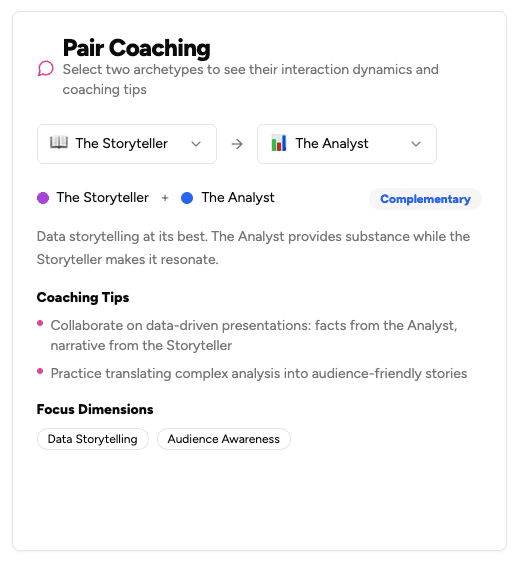
28 Coaching Conversations Your Team Should Be Having (But Aren't)
Every pair of communication archetypes has a unique coaching dynamic. We mapped all 28 combinations with ready-to-use 3-point agendas that turn any two teammates into growth partners.
4 min read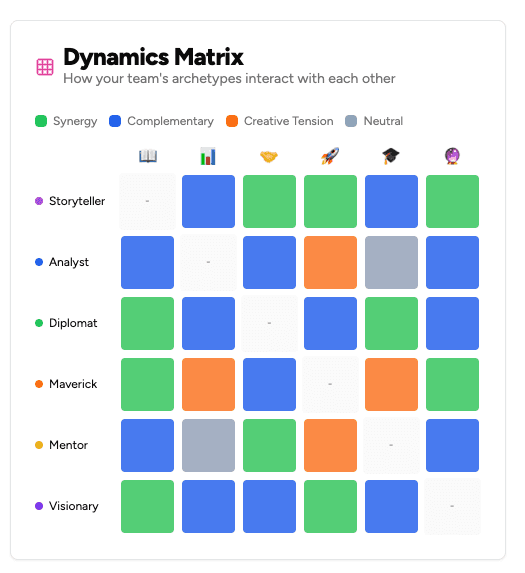
The Dynamics Matrix: Why Team Communication Is a Relationship Problem
Your team's communication issues aren't individual — they're relational. The Dynamics Matrix maps how every archetype pairing interacts, turning gut feelings about team chemistry into actionable intelligence.
4 min readGet insights from The Lab
Weekly research on voice science, executive communication, and leadership development. No spam, unsubscribe anytime.